
Demolished the Babri Masjid in Ayodhya (बाबरी मस्जिद तौड़ने का इतिहास)
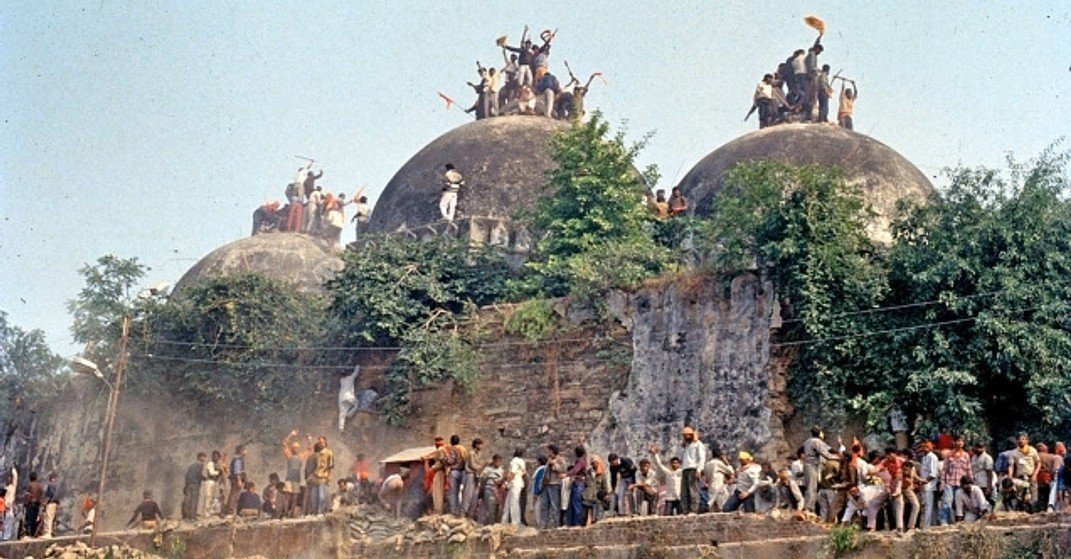
On December 6, 1992, Hindu activists demolished the Babri Masjid in Ayodhya, built in 1528, escalating the Ram Janmabhoomi dispute.
Historical Background of Babri Masjid
- Construction (1528–29): The Babri Masjid, located in Ayodhya, Uttar Pradesh, was built around 1528–29 CE (935 AH) during the reign of Mughal emperor Babur. Inscriptions suggest it was constructed by Mir Baqi, a Mughal commander, and named after Babur. Some Hindus claim the mosque was built after demolishing a temple marking the birthplace of Lord Rama (Ram Janmabhoomi), though historical evidence for this is contested, and the Baburnama (Babur’s chronicles) does not mention a temple’s destruction or the mosque’s construction.
- Religious Significance: Ayodhya is a holy city for Hindus, believed to be the birthplace of Rama, a central deity in Hinduism. The mosque’s location became a point of contention, with some Hindus asserting it stood on Ram Janmabhoomi, while Muslims maintained it as a significant place of worship.
Early Disputes (18th–19th Century)
- Initial Conflicts: Tensions emerged in the 18th century. A 1767 account by Jesuit missionary Joseph Tiefenthaler noted Hindus worshipping at a platform near the mosque, believing it to be Rama’s birthplace, and claimed the site was demolished by either Babur or Aurangzeb, though this is debated.
- Legal Beginnings (1885): The first recorded legal dispute occurred when Mahant Raghubir Das, a Hindu monk, filed a suit to build a temple on the mosque’s outer courtyard (chabutra). The Faizabad court rejected the plea, noting the mosque’s construction 356 years earlier made it impractical to alter the status quo.
Escalation in the 20th Century
- 1949 Idol Placement: On December 22–23, 1949, idols of Lord Rama were placed inside the mosque, allegedly by Hindu activists. Hindus viewed this as a divine event, while Muslims claimed it was an act of desecration. The government declared the site disputed, locked the gates, and restricted access, sparking lawsuits from both communities.
- 1950s–60s Lawsuits: Multiple suits were filed:
- 1950: Gopal Simla Visharad and Paramahansa Ramachandra Das sought rights to worship Rama’s idols.
- 1959: Nirmohi Akhara claimed possession of the site.
- 1961: Uttar Pradesh Sunni Central Waqf Board demanded possession and removal of the idols.
- 1986 Gate Opening: A local court ordered the mosque’s gates unlocked to allow Hindu worship, escalating tensions. The Babri Masjid Action Committee (BMAC) was formed by Muslims in protest.
Rise of the Ram Janmabhoomi Movement
- 1984–89 Mobilization: The Vishva Hindu Parishad (VHP), a Hindu nationalist organization, launched the Ram Janmabhoomi Movement to build a Ram temple at the site, led by Bharatiya Janata Party (BJP) leader L.K. Advani. In 1989, the VHP performed a Shilanyas (foundation stone-laying) near the site, intensifying communal sentiments.
- 1990 Rath Yatra: Advani’s nationwide Rath Yatra (chariot procession) from Somnath to Ayodhya galvanized Hindu support for the temple, but also fueled communal tensions. The yatra was halted in Bihar, with Advani arrested, yet it mobilized thousands of kar sevaks (volunteers). Communal riots followed in several regions.
The Demolition (December 6, 1992)
- Events Leading Up: On December 6, 1992, a massive rally of over 150,000 kar sevaks, organized by the VHP, BJP, Rashtriya Swayamsevak Sangh (RSS), and Bajrang Dal, gathered in Ayodhya. The rally was intended to demand the construction of a Ram temple. Speeches by BJP leaders like L.K. Advani, Murli Manohar Joshi, and Uma Bharti were later alleged to have incited the crowd.
- Demolition: The rally turned violent, and the mob overwhelmed security forces, using hammers, rods, and shovels to demolish the 16th-century mosque. By evening, the Babri Masjid was reduced to rubble, and a makeshift Ram temple was erected in its place. The Liberhan Commission (2009) later concluded the demolition was “neither spontaneous nor unplanned,” implicating 68 individuals, including BJP, VHP, and RSS leaders.
- Security Failure: Reports noted police inaction, with some officers retreating or failing to intervene, contributing to the mosque’s destruction.
Aftermath and Communal Violence
- Riots Across India: The demolition triggered widespread communal riots, particularly in cities like Mumbai, Surat, Ahmedabad, Kanpur, Delhi, and Bhopal, lasting months. Over 2,000 people, mostly Muslims, were killed, with significant property damage (e.g., Mumbai riots caused ₹9,000 crore in losses).
- Mumbai Bombings (1993): The demolition was cited as a motive for the 1993 Bombay bombings, orchestrated by Dawood Ibrahim, which killed 257 people. Jihadi groups like Indian Mujahideen later referenced the demolition to justify terrorist attacks.
- International Repercussions: Retaliatory violence against Hindus occurred in Pakistan and Bangladesh, with temples attacked and calls for “jihad” in some areas. Pakistan’s government protested to the United Nations, and Hindu minorities faced harassment.
- Political Fallout: The central government dismissed four BJP-led state governments, briefly banned the VHP, and arrested BJP leaders. However, the BJP gained political traction in subsequent years, partly due to the Hindutva wave.
Legal and Political Developments
- Liberhan Commission (1992–2009): Established to investigate the demolition, the commission’s 2009 report blamed 68 individuals, including BJP leaders Advani, Joshi, and Uma Bharti, and RSS/VHP figures, for orchestrating the event.
- Court Cases:
- 1993: The CBI filed charges against Advani and others for conspiracy, though some charges were later dropped or reinstated.
- 2010: The Allahabad High Court divided the disputed 2.77-acre site among the Sunni Waqf Board, Nirmohi Akhara, and Ram Lalla (Hindu deity), but the verdict was stayed by the Supreme Court in 2011.
- 2019: The Supreme Court unanimously awarded the entire site to the Ram Janmabhoomi Trust for a Ram temple, citing Hindu historical use, while allocating five acres elsewhere in Ayodhya for a new mosque.
- 2020: A special CBI court acquitted all 32 accused, including Advani, Joshi, and Uma Bharti, citing insufficient evidence of a planned conspiracy.
- 2022: The Supreme Court closed all remaining proceedings related to the demolition.
- Ram Temple Construction: On August 5, 2020, Prime Minister Narendra Modi laid the foundation stone for the Ram Mandir, inaugurated on January 22, 2024. The new mosque, renamed Muhammad Bin Abdullah Masjid, is planned for construction in Ayodhya.
Impact on Indian Society
- Secularism Debate: The demolition was seen as a blow to India’s secular identity, raising questions about the coexistence of religious communities. Political scientist Zoya Hasan called it “the most blatant act of defiance of law in modern India.”
- Hindu Nationalism: The event bolstered the BJP and Hindutva groups, contributing to their political rise. The slogan “Babri to bas jhanki hai, Kashi Mathura baki hai” (Babri is just a preview; Kashi and Mathura are next) reflects ongoing demands to reclaim other mosque sites.
- Muslim Community: The demolition deepened feelings of marginalization among Indian Muslims, with riots and subsequent events reinforcing perceptions of injustice.
While the Babri Masjid demolition is primarily a Hindu-Muslim issue, it has indirect relevance to Sikhism, given your focus on Pravachan, Samaj Seva, Mental Wellness, and Meditation:
- Pravachan: Sikh Gianis, during Pravachan, may reference the demolition to emphasize Sikh values of peace, equality, and interfaith harmony. Gurbani teachings, like “Awal Allah noor upaya, kudrat ke sab bande” (God created all with divine light) – Ang 1349, promote unity, contrasting with communal violence. Pravachan could encourage Sikhs to avoid divisive ideologies and focus on universal brotherhood.
- Samaj Seva: Sikh organizations like Khalsa Aid provided relief during post-demolition riots, embodying Samaj Seva by aiding affected communities, regardless of religion. This aligns with Guru Nanak’s teaching: “Vand chakko” (share with others) – a call to serve humanity.
- Mental Wellness and Meditation: The communal trauma from the demolition highlights the need for mental wellness. Sikh meditation (Naam Simran) offers solace, with verses like “Sukhmani sukh amrit prabh naam” (Sukhmani Sahib brings peace through God’s name) – Ang 262, used to heal emotional wounds. Sikhs affected by the riots’ social unrest could use Simran to find resilience, as discussed in your earlier query.
- Sikh Perspective: Sikhism rejects violence over religious sites, focusing on inner devotion over physical structures. The Gurus’ teachings, such as Guru Arjan Dev’s inclusion of Muslim saint Mian Mir to lay the Golden Temple’s foundation, exemplify interfaith respect, contrasting with the demolition’s divisiveness.
Conclusion
The Babri Masjid, built in 1528–29 in Ayodhya, was demolished on December 6, 1992, by a Hindu nationalist mob, following a campaign led by the BJP, VHP, and RSS. The event, preceded by decades of disputes and the 1990 Rath Yatra, triggered riots killing over 2,000, mostly Muslims, and strained India’s secular fabric. Legal battles culminated in the 2019 Supreme Court verdict awarding the site for a Ram temple, completed in 2024, with a new mosque planned elsewhere. In Sikhism, the event underscores the importance of Pravachan to promote peace, Samaj Seva to aid victims, and Meditation for mental healing, aligning with the faith’s emphasis on unity and compassion.