
Satchandiyagya (सतचण्डीयज्ञ)
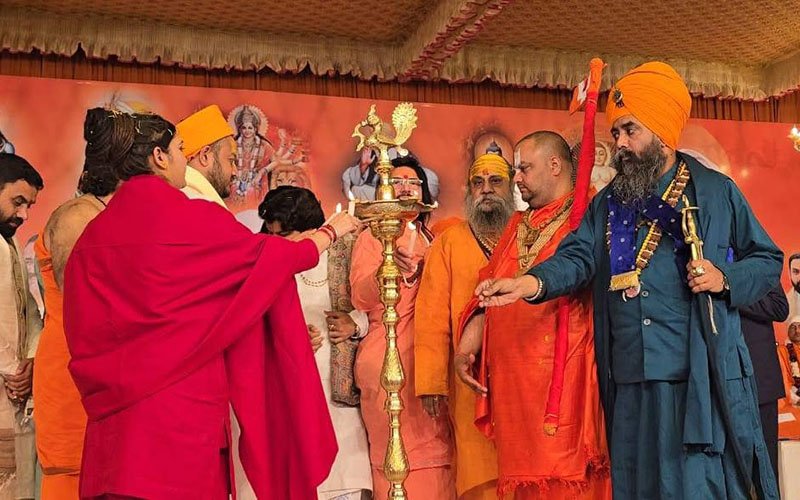
The term Satchandiyagya (Sanskrit: सतचण्डीयज्ञ) refers to a significant Hindu ritual, a yagna (fire sacrifice) dedicated to Goddess Durga in her fierce form as Chandi, as described in the Durga Saptashati (Devi Mahatmya or Chandi Path). Below is an explanation of its meaning, significance, and relevance, particularly in the context of Sikhism and its connection to Pravachan (spiritual discourse), as per your previous queries.
Meaning of Satchandiyagya
- Sat (सत) : Means “one hundred,” indicating the ritual’s scale, typically involving 100 recitations of the Durga Saptashati.
- Chandi (चण्डी) : Refers to Goddess Durga, embodying divine feminine energy (Shakti), celebrated for defeating demons like Mahishasura.
- Yagya (यज्ञ): A Vedic fire ritual involving offerings into a consecrated fire to seek divine blessings.
Thus, Satchandiyagya is a grand fire ritual with 100 recitations of the Durga Saptashati, accompanied by a havan (fire offering), to invoke Goddess Durga/Chandi for protection, prosperity, and spiritual purification.
Significance in Hinduism
Satchandiyagya is a highly revered ritual in the Shakta tradition of Hinduism, known for its spiritual potency. Key points include:
- Purpose: Performed to:
- Protect against enemies and negative forces.
- Remove astrological afflictions (doshas).
- Achieve prosperity, success, and spiritual growth.
- Purify the mind, body, and environment.
- Spiritual Power: The recitation of the 700 verses of the Durga Saptashati, which narrates Durga’s victories, invokes her divine energy to dispel evil and obstacles.
- Occasions: Commonly conducted during Navratri (Chaitra or Sharad) due to its spiritual significance.
- Mythological Basis: Rooted in the Markandeya Purana’s Devi Mahatmya, symbolizing the triumph of good over evil.
Relevance in Sikhism
Satchandiyagya is primarily a Hindu ritual and has limited direct relevance in Sikhism, which emphasizes monotheism and devotion to one formless God (Ik Onkar) through the Guru Granth Sahib. However, cultural and historical overlaps in Punjab, where Sikhism and Hinduism coexist, provide some context:
- Not a Sikh Practice: Sikhism does not endorse deity worship or Vedic rituals like Satchandiyagya. Core Sikh practices include Kirtan (devotional singing), Simran (meditation on God’s name), and Katha (discourse on Gurbani), which align with the Pravachan you asked about earlier.
- Cultural Overlap: Some Sikh families, influenced by regional Hindu traditions, may participate in or sponsor Satchandiyagya due to cultural or familial ties, but this is not aligned with Sikh doctrine.
- Shakti in Sikhism: Sikh Gurus, notably Guru Gobind Singh, referenced Shakti (divine power) in works like Chandi di Var, a Punjabi composition inspired by the Durga Saptashati. This text uses Durga’s battles as a metaphor for the fight against evil, not as an endorsement of Chandi worship or yagnas.
- Pravachan Connection: In Sikhism, a Pravachan (or Katha) might involve a Giani discussing the symbolic meaning of Shakti in texts like Chandi di Var, emphasizing God’s universal power rather than ritualistic worship. For example, a discourse could explain how the Guru Granth Sahib’s teachings encourage inner strength and righteousness, akin to Durga’s triumphs, without advocating yagnas.
Procedure of Satchandiyagya
Satchandiyagya is a complex, multi-day ritual performed by skilled Brahmin priests. A simplified overview:
- Preparation:
- A sacred site is set up with a havan kund (fire pit), purified using cow dung, water, and kusha grass.
- Idols of Ganesha, Durga, Navagraha (nine planets), and a kalash (sacred pot) are installed, along with sacred diagrams (mandalas).
- Recitation:
- The Durga Saptashati (700 verses across 13 chapters) is recited 100 times, often over 4 days, by multiple priests for efficiency.
- Recitations require precision in pronunciation to ensure spiritual efficacy.
- Havan:
- Offerings like ghee, wood, and herbs are made into the fire, accompanied by mantras from the Durga Saptashati.
- The ritual ends with Purnahuti (final offering).
- Additional Rituals:
- Worship of Ganesha, Shiva, Navagraha, and guardian deities.
- A bhandara (community feast) to share prasad and blessings.
- Scale:
- Typically spans 4 days, with larger variants like Sahasrachandi (1,000 recitations) or Lakshachandi (100,000 recitations) for greater impact.
Materials Needed
- Havan items: Ghee, wood, herbs.
- Colors: Red, yellow, green, pink (abir, gulal).
- Threads: White, red, black for specific mantras.
- Durga’s flag, idols, kalash, and other ritual items.
Benefits
- Protection from negative energies and enemies.
- Removal of obstacles and planetary afflictions.
- Spiritual purification and blessings for prosperity.
Conclusion
In Hinduism, Satchandiyagya is a powerful ritual to invoke Goddess Durga’s blessings through 100 recitations of the Durga Saptashati and a fire sacrifice. In Sikhism, it is not a standard practice, as the focus is on Gurbani and monotheistic worship. However, cultural influences may lead some Sikhs to engage with such rituals indirectly. A Sikh Pravachan might discuss related themes, like Shakti, through Gurbani or texts like Chandi di Var, emphasizing spiritual strength over ritualistic yagnas.